Gathered with my family for my father’s funeral, I suddenly became the evil twin. The clock was ticking for me to compose a eulogy for a man I dearly loved—a man who grew kinder and more loving the older he grew, a man who faced death with an impressive degree of courage and even humor. Just a few months before, the two of us had what my father declared a “magnificent visit.”
It was not a magnificence based on his “getting better” as we usually think of it in our culture, since all that moored him to life was giving way, strength, breath, appetite. My older sister, who took charge of his care, checked in early one morning to see what might appeal for dinner. “It’s like falling out of an airplane and being asked what you want for dinner on the way down…ah, but she means well, I’m very lucky.”
Amazingly, his love of life and of the people he loved never did give way. Seeing how things were going, I summoned all my courage and talked about what might happen after he died, sharing my own near death experience, my own certainty that he wouldn’t be alone in the dark when he left his failing old body, that he would be met and carried forward by a force of love and light. “You can’t screw up dying, I promise,” I told him. “You will be in good hands and you will wonder why you were ever afraid.”
And then after he did die, while going around with my twin brother and older sister on various sad errands, this anger! After his wife Joy was diagnosed with cancer, C.S. Lewis marveled that this seemingly huge and terrifying diagnosis turned out not to be solid at all, but a succession of hours and moments containing “all manner of ups and downs.” He found out that grief is also not fixed but changeable, containing a continuum of states, even moments of wild joy. Life is not static, not fixed, and neither are we. It is important to remember this.
My father always told me to go with the flow, to “roll with the punches” of life. This is very wise advice, and not just for boxers. At one point, I flared up seemingly over the most petty and unbecoming of things: my father’s generosity in his will to his grandchildren. It was as if some deep pocket of unhealed hurt and bitterness burst open and up surged memories of my early adult years in New York, tough times full of terrible apartments, struggling to be someone in my father’s eyes, a writer of all the ridiculous and impractical things.
Rather than judging, repressing, or otherwise hurrying past these painful feelings, I decided to accept, and hold them. Anger opened into a deeper sorrow. It turned out that I was still harboring a wish to prove myself to my father—and decades after that time passed. It turned out that in New York long ago, I was just a little bit like Marlon Brando in “On the Waterfront”: I wanted to be a contender, instead of a bum, which is what I was afraid I was in my father’s eyes.
“Forgiveness is an aspect of the workings of love,” psychologist Robert Karen writes in The Forgiving Self. This includes self forgiveness, which is crucial if we are to reconnect with others. “Forgiveness has many faces and proceeds by degrees. Each opening toward the other person [or towards ourselves], however miniscule, however incomplete when measured against the ideal, is important and may even be immense in its own way….Contrary to the saintly view, anger is not anathema to forgiveness. It can coexist with it. It can be its harbinger.” Anger can liberate the warmth of love.
Forgiveness of ourselves and others is a continuum, a moving process, in every sense moving. It is a force of liberation, allowing us to reconnect with others and with the world, but this can occur only as we learn to reconnect with ourselves. The price of this reconnection, Karan advises, is the willingness to mourn the losses and disappointments of childhood—and this includes allowing ourselves to see through the unconscious beliefs we come up with to make sense of our pain.
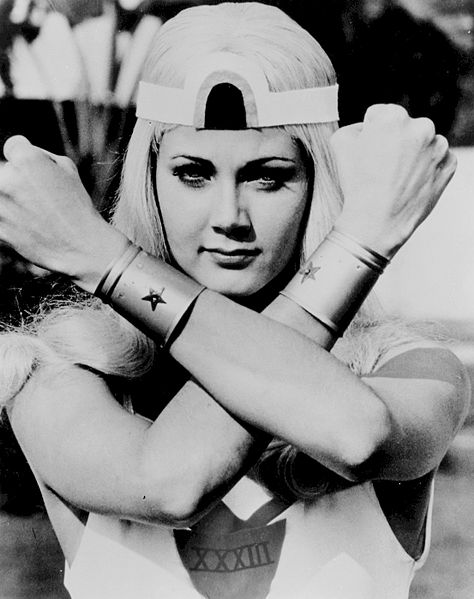
I never had to prove myself to my father, and his love was granted once and for all, long before I moved to New York. As this particular little bubble of belief to rose from the murky depths and burst in the light of awareness, I felt a fresh burst of love and compassion for my father and also for myself. It isn’t easy being human. Back in New York and at Parabola, I am helping pull together “Spirit in the World.” It is dawning on me that our culture could use a new kind of superhero. Her super power would be tiny, the ability to make the smallest possible inner movements towards herself and others—to be for the deeper truth, to give attention to (someone last time wisely observed that forgiveness is “for and give”) –to look without turning away.


 Tracy Cochran
Leave a comment