27
Nov 12

Learning to Surf

Photo credit: Alamy


The caption accompanying this delightful picture of Snoopy is:

“I think I’ve discovered the secret of life—you just hang around until you get used to it.”

–Charles M. Schulz

And what does surfing Snoopy have in common with William Blake?

“Man has no body distinct from his soul, for that called body is a portion of soul discern’d by the five senses, the chief inlets of soul in this age,” writes Blake in The Marriage of Heaven and Hell.

Life cultivates soul.  The more we live, the more soul.  Soul is deep knowing, deep seeing.   We experience soul in those moments when the clouds of self-absorbed ignorance part—moments when we suddenly perceive the deeper truth of reality.  There is always a deeper truth.  In the Theravada Buddhist tradition, this is insight (vipassana-bhavana).   According to the scholar monk Bhikkhu Bodhi insight is  fathoming “the truth of our being in the only sphere where it is directly accessible to us, namely, in our own experience.”

There is no path or way apart from the body.  To stretch the surfing metaphor, this realization has been crashing over me like a wave.  The body is the way.  Insight means seeing into life.  The door to understanding opens inward:  we must stand under or experience the truth.  We must embody it.

Once when the Buddha was gravely ill he asked a monk to recite the seven Factors of Enlightenment to him. This cured him.Why would that be?  I think it is because remembering the seven factors are a way of opening the door of life, leading us to the wellsprings of interest, energy, joy.

In Buddhism, the Seven Factors of Enlightenment are:

  • Mindfulness i.e. to remember there is a deeper truth, that we are fish swimming in water.
  • Investigation, i.e. to be interested in that deeper truth.
  • Energy
  • Joy or rapture
  • Relaxation or tranquility
  • Concentration
  • Equanimity, to be able to face life in all its vicissitudes—the art of surfing.


During vipassana or insight meditation, remembering one of the seven factors may be an antidote to a particular state—remembering or allowing the first four, mindfulness, investigation, energy, and joy are medicine against sleepiness, depression, sloth.

Actually, according to the Buddha mindfulness is “always useful” –remembering that there is a deeper truth makes awakening possible.  But it is also important to remember if we are to awaken, it must happen in this very body, in this very life.

The Sanskrit word virya, the word for the factor of energy means “hero.” In Sanskrit, virya came to refer to the power of a great warrior to overcome his enemies. The English word virile evolved from virya.

Waking up does take courageous or heroic effort.  But it doesn’t necessarily mean buckling ourselves into armor and thrusting away our feelings.  Just the opposite.  As Tibetan Buddhist teacher Pema Chodron writes in The Wisdom of No Escape: “It isn’t easy and it’s accompanied by a lot of fear, a lot of resentment, and a lot of doubt. That’s what it means to be human, that’s what it means to be a warrior. You go through the process of taking off the armor that you might have had some illusion was protecting you from something only to find that actually it’s shielding you from being fully alive and fully awake. Then you go forward and you meet the dragon and every meeting shows you where there’s still some armor to take off. Take refuge in the courage and the potential of fearlessness of removing all the armor that covers awakeness.”

The great paradox is that it is only by hanging around living that we can wake up.  It is only in via this body that we can find the deeper truth, that we can have in-sight, that we can under-stand.


22
Nov 12

Feast

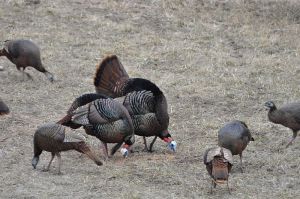
Today, as I happily anticipate going to a dear friend’s house for a Thanksgiving feast, I find myself thinking of the classic Thanksgiving story:  of pilgrims weathering a hard passage and being met by kindness—only to repay that kindness with staggering cruelty (to be historically accurate, the first pilgrims lived in peace, the cruelty came later).  May the Earth and the Native people be healed from the ravages of the European infestation.  Science is beginning to look at the way the brain is wired for story.  In our dreams and fictions–and even in our earliest childhood play–we seek ways out of trouble, out of heartbreak, the possibility loss, the looming possibility of death.  We seek meaning, healing.  We seek to be part of a greater whole.

In sitting and walking meditating, we practice letting go of our thinking, of our stories.  We practice sensing what is happening in the body below the thinking.  Lately, I have especially loved practicing walking meditation around the lake where I live.  When I realize I am thinking (which is most of the time), I redirect the attention to the endlessly changing flow of pleasant, unpleasant, and neutral sensations.  I notice fresh air and sunshine and shadow pass over the skin.  A feast of impressions, of glorious, mysterious life, is constantly being offered without beings asked.  The first Thanksgiving gift givers were aware of this unending stream of gifts from the Creator. Our cup runneth over, and all the while most of us pilgrims don’t notice.  We are too busy telling ourselves stories to ourselves, longing for better entertainment than Creation, longing for starring vehicles.

At moments, we understand that this bewildering business of embodiment is more than a simple practice of sense-feeling: it is soul-knowing.  I am coming to suspect that having soul is the deep knowing of life in the body.  We may have inklings about this when the road of life is smooth.  We walk along noting pleasant, unpleasant, and neutral sensations, the sensation of cool, fresh air on the face, sunlight in the eyes—and all of a sudden a door opens inside and we go deeper into life.

The body has its own way of knowing—not in words but in resonance and a need to respond to what touches us. There are gestures that want to well up from the body.  Some are almost imperceptible, including the wish to be still, to bear witness.  Some gestures are sweeping, the wish to embrace, to serve.  Sometimes I want to open my arms to take in the beauty of the lake, to reach out to the God behind it.  Sometimes I want to offer thanks, to offer myself as another potentially useful human being, another pair of hands on the bucket brigade.

At such moments, we discover that a deeper capacity for story lives in the body.  This is not a head story in which we play a starring role but a story in which we are part of a greater whole. Many people find this when there is no place to go but down.  We may find the deeper story–the story that always includes opening to receive and respond to gifts we have done nothing to deserve–when we have no choice, when everything else has failed.

Often it is when we are bereft, when we cannot be satisfied by simpler stories, a feast appears before us.  The loaves and fishes are not just sufficient but miraculous.  It is when we think we have nothing to give that the most graceful gestures become possible.  People with soul know this: there is really nothing that is ours but honesty, a resonance with life, a wish to be useful and kind.  The feast appears when we know our true poverty.  Soulful is the body receiving and responding to the gifts of life that come like grace. Ask and it shall be given.  We are made to ask…and to give thanks.


Thanks

Listen
with the night falling we are saying thank you
we are stopping on the bridges to bow from the railings
we are running out of the glass rooms

with our mouths full of food to look at the sky
and say thank you
we are standing by the water looking out
in different directions

back from a series of hospitals back from a mugging
after funerals we are saying thank you
after the news of the dead
whether or not we knew them we are saying thank you
in a culture up to its chin in shame
living in the stench it has chosen we are saying thank you

over telephones we are saying thank you
in doorways and in the backs of cars and in elevators
remembering wars and the police at the back door
and the beatings on stairs we are saying thank you
in the banks that use us we are saying thank you
with the crooks in office with the rich and fashionable
unchanged we go on saying thank you thank you

with the animals dying around us
our lost feelings we are saying thank you
with the forests falling faster than the minutes
of our lives we are saying thank you
with the words going out like cells of a brain
with the cities growing over us like the earth
we are saying thank you faster and faster
with nobody listening we are saying thank you
we are saying thank you and waving
dark though it is

–W.S. Merwin from “The Rain in the Trees,” 1988


19
Nov 12

Being Demeter

“At difficult times in my writing life, I tell myself certain stories to remind myself of things I mustn’t forget, information which can only be encoded in story form or it won’t get where it’s going,” writes the great Latina writer Julia Alvarez in an essay written for the latest issue of Parabola. “That place I used to call the heart, and which I now call my soul, the heart you earn as you grow older.”

I always associated the soul with the awareness–the implicit understanding–that dwells in body, so I feels very right to me that the story Alvarez writes of turning to for guidance is that of Demeter, Persephone, and Hades:

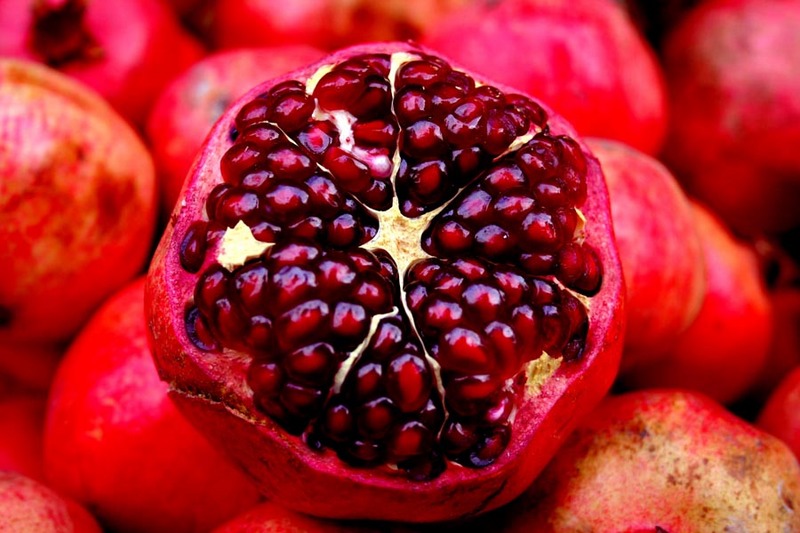
“It is a story of death, and rebirth in a life and on earth.  Young Persephone is carried away by Hades, the king of the underworld; her mother, Demeter, goddess of agriculture and the earth’s fertility, is bereft.  In a fury of self-destructiveness, she punishes her own kingdom with plagues and droughts.  Plants, creatures, humans begin to die off.  Alarmed, the king of the gods, Zeus, orders that Persephone be returned, provided she hasn’t eaten anything in the underworld.  But to ensure her stay, Hades has tricked Persephone into eating seven pomegranate seeds.  Zeus’s compromise:  Persephone will spend spring and summer and fall with her mother on earth and then descend to the underworld to be with her husband for the rest of the year.”

Alvarez writes of those times when the “beginner’s mind” of Persephone is not enough.  At times we must be as bereft as Demeter, even as dark as Hades.   Alvarez writes about being a writer.  But I find that the great myth of Demeter descending into the underworld applies to spiritual practice as well.   To know reality– to be free–we die to thought and descend into the underworld of the body.

Bucking against a powerful inclination to be cozy and bask in the glow of one screen or another, I went out to meditate at the local sangha of my friend and mentor, Gina Sharpe, one cold night last week.  There had been no sangha for weeks due to the power outages and other havoc caused by the great storm.  Entering the little yoga studio was like entering a sheltering cave.  I sat down on my zafu full of thought, consumed by the looming prospect of loss, of my father, of a dear friend, of certain illusions.    As the quiet of meditation deepened, I kept thinking, feeling like a ghost, hovering above the ground of my own being.

It sparked my curiosity, to see how much I wanted to stay up in the attic, hovering above full embodiment, but I knew it had to do with the fear of going under, of losing control.  In her book My Stroke of Insight, brain scientist Jill Bolte Taylor explains that the natural life span of an emotion—the time it takes to sweep through the body—is only a minute and a half.  After that, repeating thoughts keep the emotion alive.   In the face of loss, we tend to go over and over old ground, as if we could make life stay.

In the Buddha’s great teaching on the practice of meditation, the Four Foundations of Mindfulness, the second foundation is feeling.  It is known in Pali as vedana, which is derived from a verb which means both “to feel” and “to know.” (Not to geek out on words too much, but think of the ancient Sanskrit word veda, as in Rig Veda, a way of knowing that must also be felt).   Vedana comprises both bodily feelings and mental feelings, but it is not emotion as we usually think of it.  Feeling tone is the instantaneous valuation we stamp on the basic physical experience of being alive that wafts in through the sense doors.   Without even noticing it, we judge every sensation, sound, and sight that touches us pleasant, unpleasant, or neutral.

When I was able to bring my attention to this curious tendency, this need to stamp the constantly changing flow of our experience with a personal value judgment, I discovered something extraordinary:  What we think we experience is not our true moment-by-moment flow of experience.  Within states we call “sadness” or “happiness” there are shimmering beats of pleasant, unpleasant, neutral, air on the skin.  There is a whole world of experience that opens up when we just sit and breathe.

I felt like Demeter, abandoning the surface of life, the known world of thought, to descend into the underworld of the body.  I was seeking the lost child of my own experience.  To put it in contemporary terms: science is seeking to find ways to measure the difference between subconscious versus conscious knowing, implicit versus explicit knowing.  As we open to the unconscious via meditation and prayer, a vast field of knowing opens.  May we learn to let go and receive the gifts that are constantly being offered.


08
Nov 12

Weathering the Storm Together

I flew home from Florida yesterday, landing in the midst of a snow storm.  Now I’m sitting on the sofa, marvelling at the amount of snow that has fallen, shocked at the downed trees and power lines and other signs of devastation, sad that so many of my neighbors are still without power. And I’m very aware  that all this marvel and amazement comes after the fact, after the storm.  After one has heat and light and a good strong cup of coffee.

When the storm hits, the tissue of our ordinary life is stripped away and we come face to facet with the essentials, the need for heat, light, water, the need to give and receive news, help, kindness.  That last–the helping neighbors, the kindness remains, even when the first burst of cooperation wears thin.  As the days and weeks without light and heat go by (effecting key members of our Parabola family, Jeff, David, and Lee) we discover that kindness is not sentimental but essential.  We discover that taking a hot cup of coffee to a lineman up from Georgia, or lending a hand to the neighbors, is not just a nice thing to do–it is an expression of understanding.

After the storm hit, I stayed on in Florida, where I was visiting my 93 year old father, who is facing his own super storm of sickness, aging, and impending death.  He became very, very sick while I was there, and I decided to stay with him, to be his hospice nurse, to talk with him about dying. “We’re up to our neck in crocodiles here,” he said one day. This meant things were too extreme to worry about anything optional. I thought of all my friends weathering power outages, cold, trees through their roofs. Emergencies concentrate the mind.  My father and I talked a great deal about dying.  Many years ago I had a very dramatic NDE (another story for another time. I told him I glimpsed the light–the great luminous loving intelligence–behind the appearances of this world.  I told him that we are all held by this light, this great force of love and compassion, and that he would be carried by this love when he left his body.  I told him that love doesn’t end when the body dies.

“I know God is not a white guy,” my father told the chaplain who came to visit the other day. “He is a Being. My daughter from New York (gesturing to me) died and she told me.” I told my father the chaplain was there to talk about being calm and collected. “Do you think I calmed him down?” my father asked.

A good friend emailed me in Florida (thank heavens for iPads) to remind me that being with a loved one who is dying is also a time for honesty.  This struck me as extraordinarily important–and something I had not considered.  As I sat with my father one afternoon, I dared to mention a time when he had really hurt me.  “I forgave you a long time ago,” I told him.  “But I want to give you a chance to say you are sorry.”  He was.  I wasn’t being sadistic to a dying old man.  I had an inkling that it is best to leave this world in an attitude of humility, seeking forgiveness for all the ways we may have hurt or harmed others knowingly and unknowingly.   Blessed are the poor in spirit, blessed our those who go forward with an open heart, empty hands.

I came to Florida carrying a question about why it is important to embody the truth, to feel all there is to feel, to experience as deeply as we can experience, not to live our lives gliding over things like ghosts, escaping into thoughts. I have an inkling that dying well has to do with participating deeply in life. And it is the hard times, the heart aches, the big storms and black outs that turn out to be the deepest springs of wisdom and compassion.

The best we have to share with one another is not what we imagine to be our spiritual treasure (not even NDEs) but the kindness that flows from ourpoverty.  Blessed are those who know that we are not in control, that God is in control.  Blessed are those who are open, who keep each other company and bear simple gifts, hot coffee,drinking water,  a good story.